How Local Pest Control Companies Actually Steal the 3-Pack Spot
In the high-stakes world of pest control, timing is everything. When a homeowner discovers a termite swarm in their crawlspace or a nest of hornets by the front door, they aren’t browsing page four of the search results. They are looking for an immediate, local solution. This urgency is exactly why the Google Map Pack – the “3-pack” of local businesses that appears at the top of search results – is the most valuable real estate on the internet for pest control operators.
The data doesn’t lie: Businesses in the 3-pack generate 93% more action-driven results (calls, clicks, and direction requests) than those ranked lower. If your business is sitting at position four or five, you are effectively invisible to nearly all high-intent customers. Meanwhile, the companies currently sitting in those top spots aren’t just “lucky.” They are actively using aggressive google business profile seo strategies to maintain their dominance. Dominating this space isn’t just about visibility; it can lead to a staggering 3x traffic growth in as little as 90 days. If you aren’t the one in the 3-pack, someone else is “stealing” your leads every single day.
The Anatomy of a 3-Pack “Theft”: Beyond Basic Optimization
Most pest control owners believe that “optimizing” their profile means filling out their name, address, and phone number (NAP) and maybe adding a few photos of a spray rig. That is no longer enough. To truly dominate, you have to understand the concept of the “Competitor Gap.” The companies that successfully steal a 3-pack spot do so by identifying exactly where the current leaders are vulnerable.
A true “theft” of a ranking spot begins with a deep dive into the top three competitors. Are they neglecting their Google Business Profile (GBP) updates? Is their review response rate lagging? Are they missing crucial service categories like “Wildlife Removal” or “Mosquito Control” despite offering them? By using a google business profile audit tool, savvy marketers can pinpoint these weaknesses and exploit them. For example, if a top-ranked competitor hasn’t posted a photo or update in three months, that is a signal to Google that the listing is stagnant. By flooding your own profile with high-quality, relevant updates, you create a “signal density” that the algorithm eventually favors over the incumbent.
We’ve documented this process extensively in our breakdown of How we used competitor gaps to steal a local 3-pack spot. It involves more than just being “better”; it’s about being more active and more relevant in the eyes of the Google bot. When you provide the fresh, high-intent data that Google craves, the algorithm has no choice but to swap the stagnant incumbent for your active, authoritative profile.
The Technical Foundation: Google Business Profile SEO in 2026
As we look toward 2026, the technical requirements for ranking have shifted from simple keyword placement to complex entity validation. Choosing “Pest Control Service” as your primary category is the baseline, but the “stealth” players are maximizing their secondary categories to capture long-tail local searches. If you aren’t listing “Termite Control Service,” “Bird Control Service,” and “Bed Bug Treatment” as secondary categories, you are leaving money on the table.
One of the most significant shifts we are seeing is what experts call the “radius wipe.” Google is increasingly tightening the proximity signal, often favoring businesses with a physical office located in the heart of the high-search-volume area over service-area businesses (SABs) that cover a 50-mile radius. If you are an SAB, you must work twice as hard to prove your local relevance. This is where many fail, but it’s also Why standard citation building services aren’t fixing your visibility gap. Standard citations are often too generic; you need hyperlocal mentions that anchor your business to specific neighborhoods.
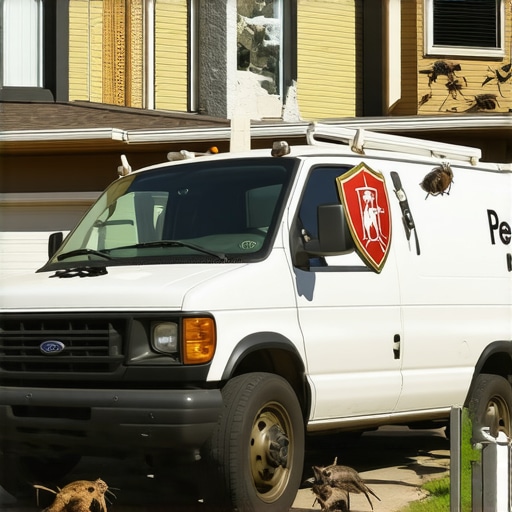
Photos are another technical battleground. In 2026, AI-generated spam is everywhere. Google’s Vision AI can now easily distinguish between a generic stock photo of a cockroach and a real, geo-synced photo of your branded truck parked in a local driveway. To rank, you must use authentic imagery. Every photo you upload should be a high-resolution, original image of your technicians in action, your equipment, and your local office. For those who need a professional edge, utilizing a google maps ranking service can ensure that your technical foundation is unshakeable, from category selection to the metadata embedded in your images.
Reference the Shoreline Digital research regarding 2026 trends: AI search snapshots are now looking for “proof of work.” If your profile doesn’t show real-world activity, the AI will bypass you for a competitor who does.
The Review Velocity & Engagement Signal
Reviews have always been a ranking factor, but the “theft” happens when you master review velocity and keyword integration. Having 500 reviews is great, but if 400 of them are from three years ago, they carry less weight than a competitor who has gained 20 reviews in the last 30 days. This is the velocity signal. Google wants to see that you are consistently providing good service now.
Furthermore, the content of the reviews is a massive ranking signal. A review that says “Great job!” is worth a fraction of a review that says, “The team at XYZ Pest Control provided the best termite inspection and rodent exclusion in Athens.” You must encourage your customers to mention the specific service and the location. This creates a natural keyword association that tells Google exactly what you should rank for. This is one of The specific local signals that turn a map listing into a lead machine.
Response rate is the final piece of the engagement puzzle. A 100% response rate is no longer a “nice to have”; it is the new baseline. But don’t just say “Thanks for the review.” Use your responses to reinforce your services. “Thank you, Sarah! We were happy to help with your mosquito misting system in the West End neighborhood.” This adds another layer of local and service-based relevance to your profile that competitors often ignore.
Hyperlocal Authority: Schema and Map Embeds
To truly “steal” a spot, you have to move beyond the Google Business Profile itself and look at how your website communicates with Google. This is where “Stealth” SEO comes into play. Using Local Business Schema (JSON-LD) is non-negotiable. This structured data tells Google’s spiders exactly where your business is located, what services you offer, and what your service area looks like in a language the machine understands perfectly.
Many pest control companies make the mistake of only embedding their Google Map on their “Contact Us” page. If you want to dominate a specific suburb or neighborhood, you need neighborhood-specific landing pages that feature a map embed of your GBP. For example, if you are targeting “Ant Control in Summer Brooke,” that specific landing page should have content about local ant species, customer testimonials from that neighborhood, and a direct map embed. This creates a powerful “hyperlocal loop” that reinforces your proximity to the searcher. We’ve seen this move alone restore rankings for businesses that thought they were permanently buried. You can read more about this in our guide on The Specific Structured Data Moves That Restored Our Map Visibility.
By integrating these advanced google business profile seo tactics, you are building a wall of authority that is very difficult for competitors to climb. You aren’t just a pest control company; you are the pest control authority for that specific geographic coordinate.
Navigating the 2026 AI Search Shift
The landscape of local search is undergoing a massive transformation with the rise of AI search snapshots (like Google SGE and Perplexity). We are seeing a phenomenon known as “Signal Drift,” where a business that once dominated the 3-pack suddenly disappears because its digital “entity” isn’t strong enough for the AI to verify. The 2026 “Location Glitch” and “Signal Mismatch” issues have shown that Google’s AI is becoming more skeptical of businesses that don’t have a cohesive digital footprint.
To combat this, you must ensure that your business information is identical across the entire web. If your LinkedIn profile says you are in one part of town and your GBP says another, the AI perceives this as a “Signal Mismatch” and may drop your ranking. Monitoring these shifts requires advanced local seo software that can track your “entity strength” across various platforms, not just your map position. You must also be aware of The exact proximity signals that are pushing your business out of the map pack, as AI search snapshots often prioritize the “absolute closest” verified entity for emergency services like pest control.
Success in the AI era is about being the most “trusted” entity, not just the one with the most backlinks. This means verified reviews, consistent NAP data, and a website that provides deep, authoritative answers to pest-related questions.
Conclusion: Reclaiming Your Territory
The Google 3-pack is a zero-sum game. For you to move up, someone else must move down. If you have noticed a drop in your leads or visibility, it’s likely because a competitor has started using these advanced tactics to “steal” your spot. But here is the good news: what can be stolen can be reclaimed. By focusing on competitor gap analysis, technical category optimization, review velocity, and hyperlocal schema, you can push back and take the territory that belongs to you.
Don’t let your business become an “invisible” casualty of the algorithm. Audit your current position, identify the gaps in your competitors’ armor, and start implementing the signals that Google – and its new AI-driven search – cannot ignore. For a complete roadmap on how to fix a failing map presence, check out The Ultimate Guide to Local SEO Rebuild and Map Rank Recovery. Your leads are waiting in the 3-pack; go get them.
Author Bio: Trey Patrick is a renowned Pest Control SEO Expert with years of experience helping pest control companies dominate their local markets through aggressive internet marketing and specialized map pack strategies. Based in Athens, Trey has helped hundreds of companies turn their Google Business Profiles into lead-generating machines.